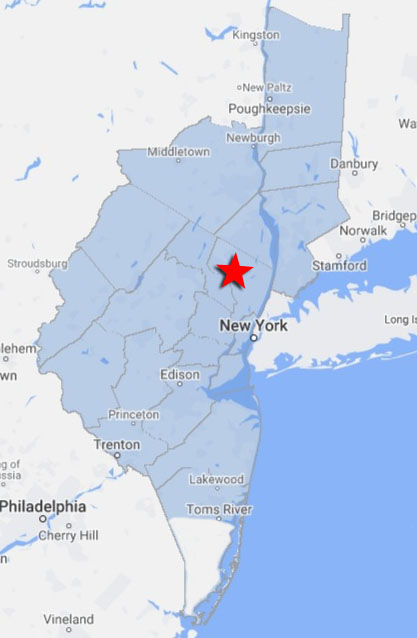


Falls are one of the leading safety concerns for older adults at home — research shows between 32 and 42 percent of adults over age 70 experience a fall each year. The good news is that most homes can be made significantly safer without a full renovation. For over 30 years, Able Care Group has helped New Jersey and New York families choose the right accessibility solution, from a simple grab bar to a full stairlift or home elevator.
This guide walks through the most common home accessibility solutions — stairlifts, wheelchair ramps, platform lifts, and bathroom safety upgrades — so you can figure out which fits your home, your budget and your mobility needs. If you’re not sure where to start, a free consultation is the fastest way to get a straight answer.
Stairlifts
Stairlifts are the most popular solution for homes with staircases, letting you keep using every floor safely without moving bedrooms downstairs or taking on a renovation. A motorized chair rides along a rail mounted to your existing staircase, carrying you up and down at the push of a button.
There are two main types: straight rail stairlifts, built for staircases with no turns or landings, and curved rail stairlifts, custom-built to follow staircases with bends, spiral sections or landings. Straight rail installations are often completed in just a few days, since the rail comes in standard lengths; curved rail units are custom-fabricated to your staircase, so they take longer to manufacture and install.
Either way, a stairlift installation shouldn’t require structural changes to your home — the rail attaches to the stairs themselves, not the wall, so it works even on staircases that curve away from a wall. Explore our stairlift options to compare straight and curved rail models, or call us to talk through which fits your staircase.
Wheelchair Ramps
For homes where a step or two stands between you and the front door, a wheelchair ramp is often the simplest fix. Aluminum ramps provide simple, no-step entry for wheelchairs, scooters and walkers alike, and unlike a wood or concrete ramp, they’re quick to install and require essentially no maintenance.
Ramps are also one of the more flexible solutions on this list: depending on your needs, they can be purchased outright or rented, which makes sense if you need a ramp for a shorter-term recovery rather than a permanent modification. Modular aluminum ramp systems can also be reconfigured or extended later if your needs change.
Learn more about our residential ramps to see rental and purchase options for your home.
Platform Lifts
When a ramp would take up too much yard or porch space, or the vertical distance is more than a step or two, a vertical platform lift (also called a wheelchair lift) is usually the better fit. Instead of a ramp’s gradual incline, a platform lift moves you straight up and down on an enclosed platform — accommodating both wheelchairs and scooters — and can be installed indoors or outdoors.
Platform lifts are particularly useful for porches, decks, split-level entries, or any spot where the drop is too steep for a ramp to be practical within the available space. Most installations are completed within 3 to 6 weeks, and because the equipment is self-contained, it typically doesn’t require the structural work that a home elevator does.
For larger homes needing full multi-floor access, a home elevator is also worth considering — it’s a bigger investment, but offers more capacity and a more finished, built-in look than a platform lift. See our wheelchair lift options to find the right fit for your entryway.
Grab Bars & Bathroom Safety
The bathroom is where most in-home falls happen, and it’s often the easiest room to make safer without a major renovation. Grab bars near the toilet and inside the shower or tub give you something solid to hold onto during the moments you’re most likely to lose your balance — stepping over a tub wall, sitting down, or standing back up.
Beyond grab bars, simple changes like a shower seat, a raised toilet seat, or slip-resistant flooring can meaningfully reduce fall risk, especially in combination. None of these require the scale of investment a stairlift or ramp does, which makes bathroom safety a good starting point if you’re easing into accessibility upgrades.
Since bathroom safety needs vary a lot from home to home, contact us to talk through what makes sense for your bathroom as part of a broader accessibility plan.
Frequently Asked Questions
Book a Free Home Accessibility Assessment
Ready to make your home safer? Book a Free Home Accessibility Assessment and we’ll help you compare stairlifts, ramps, platform lifts and more for your NJ or NY home.